Container Loading for Ice Bath Tubs and Chillers: FCL, LCL and Export Packaging
Sep 4, 2026 · 7 min read
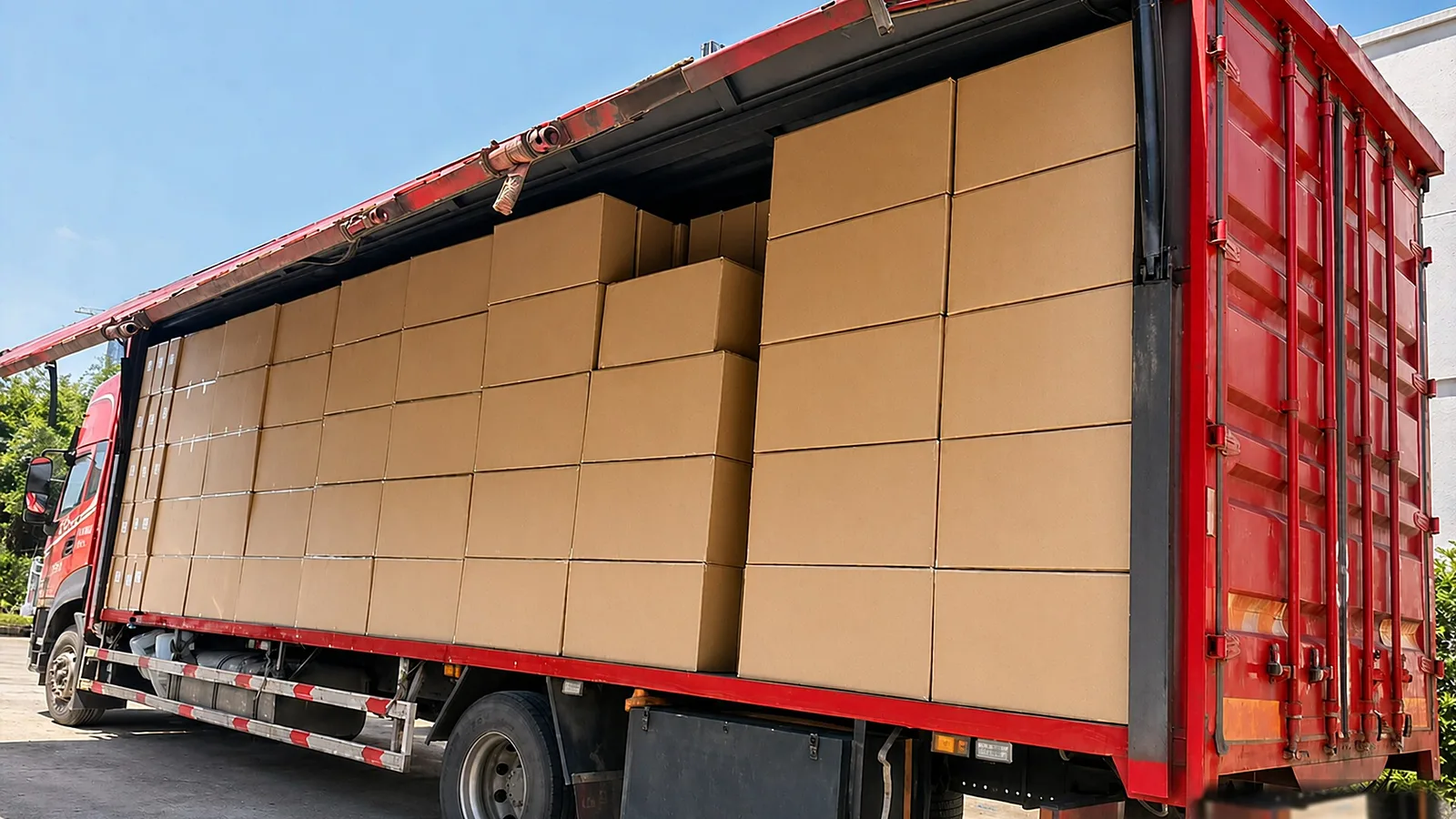
Container planning is where a good product line becomes an expensive mistake. A carton 5 cm too tall loses a tier. A pallet that is not declared changes the load count. A tub that is floor-loaded without edge protection arrives with a cracked shell.
Weight before volume
Tubs ship empty, so the water capacity on the specification sheet does not affect the container. The shipping weight is the dry weight plus packaging. Stainless steel and cedar models are heavy, and a container can hit its payload limit before it runs out of space.
Container
Typical internal volume
Typical payload
Watch for
20GP
about 33 m³
about 28 t
Volume runs out first with bulky tubs
40GP
about 67 m³
about 26–28 t
Same width and height as the 20GP, twice the length
40HQ
about 76 m³
about 26–28 t
Extra height suits tall cartons
Dimensions and payload vary by container type and operator; confirm them with your forwarder before the loading plan is fixed. ISO 668 is the standard that classifies series 1 containers.
The load count is a loading pattern, not a division
Volume divided by carton volume gives an upper bound, not the answer. The real number depends on whether the cartons stack, whether the chiller can lie down, and how much floor is lost to pallets and dunnage.
Ask the factory for a loading plan with carton dimensions, gross weight per carton, the stack limit and a top view of the pattern. A plan that has been drawn can be checked; a number in an email cannot.
Packaging has to survive the route
Double-wall corrugated cartons for tubs, with foam or moulded protection at the corners
Edge protection and strapping for stainless steel shells
A crate for chillers where the carton is not rated for stacking
Desiccant and a moisture barrier for long sea routes
Wood packaging material that meets ISPM 15 and carries the IPPC mark
ISPM 15 applies to wood packaging — pallets, crates and dunnage — not to a cedar tub sold as a product. The distinction matters when a forwarder asks for the treatment certificate.
FCL or LCL
A full container is cheaper per cubic metre and arrives without consolidation handling. LCL suits a first order or a mixed container, but every extra handling step is a chance for damage and a longer transit.
For a first order, the usual pattern is LCL for samples and small quantities, then FCL once the product mix and carton sizes are known.
Incoterms decide who does what
Incoterms 2020 define who books the freight, who insures, and where risk passes. EXW puts everything on the buyer; FOB puts the container on board at the origin port; CIF adds freight and insurance to the destination port; DDP puts delivery and import clearance on the seller. The rule does not change the price by itself, but it changes what the price includes.
Documents the forwarder will ask for
Commercial invoice and packing list with HS codes
Bill of lading
Certificate of origin where the destination requires one
Declaration of conformity and test reports for the certification regime in the destination market
Fumigation or ISPM 15 marks for wood packaging
Loading day
Photograph the empty container, the loading sequence and the sealed doors
Put heavy cartons at the bottom and distribute weight along the floor
Keep chillers upright unless the crate is rated otherwise
Brace the load so it cannot shift in heavy weather
Record the seal number on the documents
Sources
ISO 668 — Series 1 freight containers: classification, dimensions and ratings.
Incoterms 2020, International Chamber of Commerce.
ISPM 15 — Regulation of wood packaging material in international trade, IPPC.
Container internal dimensions and payload: confirm with your forwarder. The table above is indicative, not a booking specification.
Send us the carton dimensions you need and the destination port. We will return a loading plan and a packing list you can hand to the forwarder.
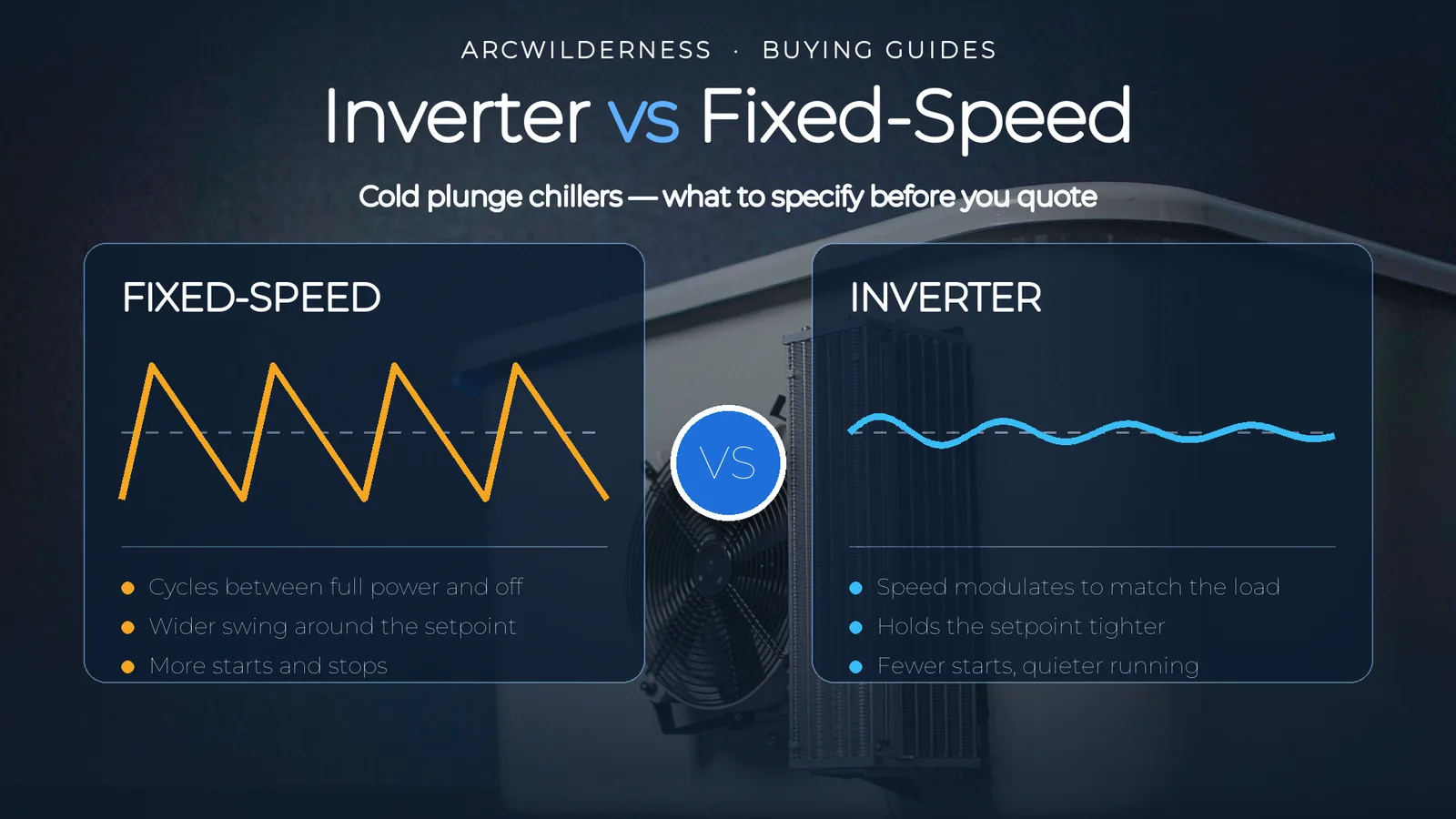
The compressor control type decides how a chiller behaves once the tub is at temperature — how tightly it holds the setpoint and how often it starts. Here is what to put in a request for quotation, and which standards answer each question.
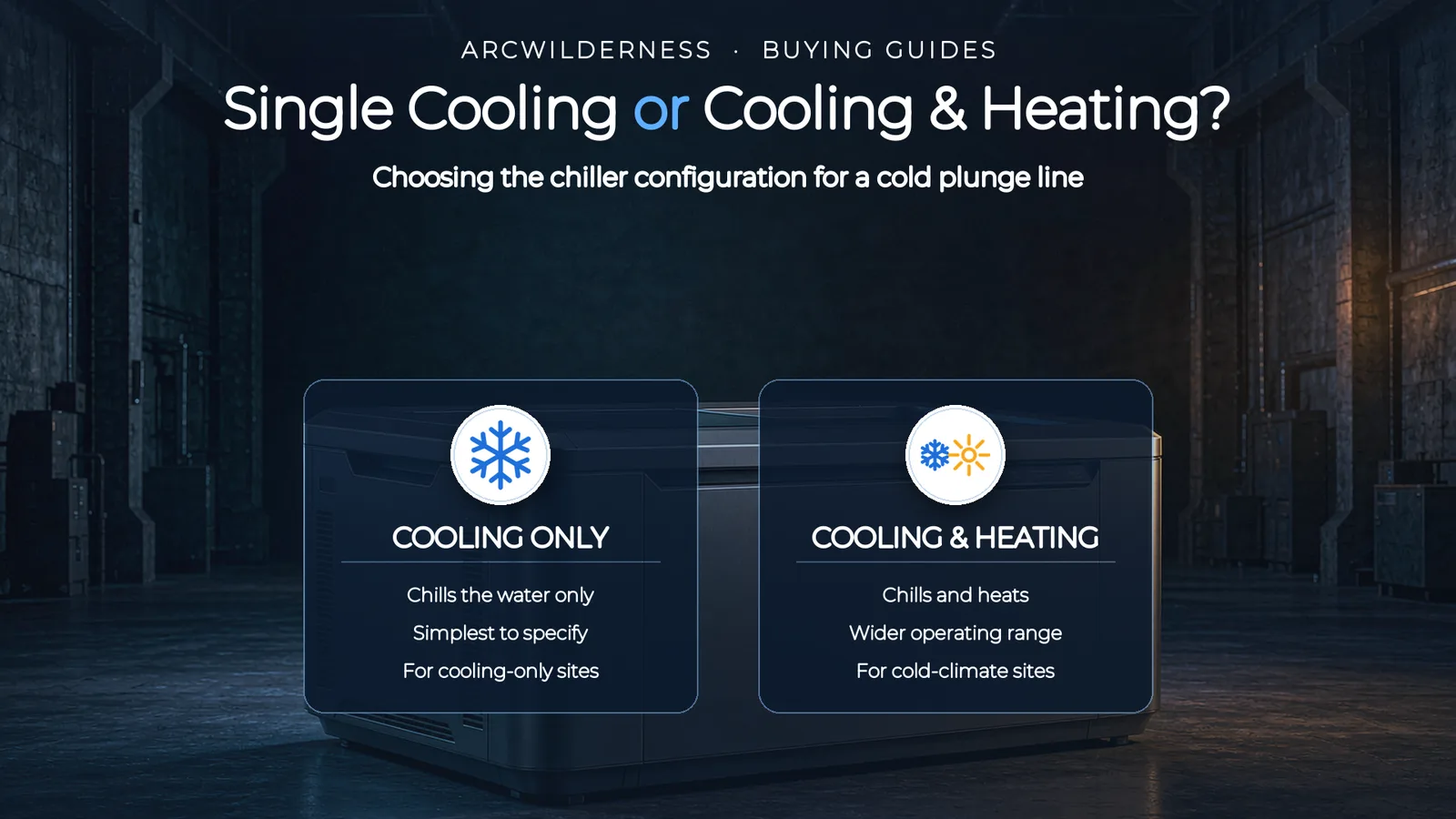
Most of our chiller range can be ordered as cooling-only or as cooling-and-heating, and one model does both at once. Here is how to decide per market, and how to write the configuration into the purchase order so the right unit is built.